US Blocks USMCA Long-Term Renewal, Creating Supply Chain Uncertainty for Texas Craft Brewers
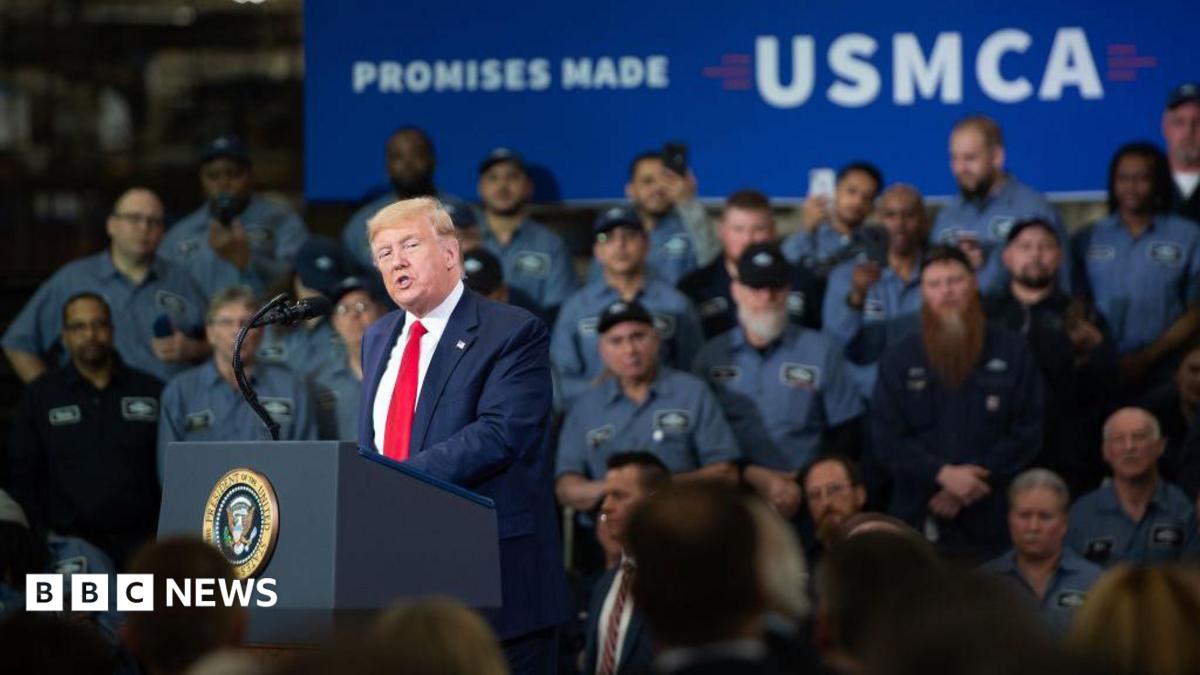
The US has declined to renew the landmark US-Mexico-Canada Agreement (USMCA) in its current form, a decision that will ripple through supply chains across North America and threaten the economic stability that independent craft brewers rely on to source ingredients and operate profitably.
The trilateral trade pact, which underwrites roughly $2 trillion in annual continental commerce, will miss out on an automatic 16-year extension. According to a senior US official, the administration "chose not to rubber stamp a USMCA renewal without addressing existing issues," and "the United States did not agree to renew the USMCA in its current form".
For craft breweries like those across Texas and the Gulf Coast, the implications are significant. Without a long-term commitment to the trade framework, the region faces fresh economic uncertainty. If the countries fail to unanimously agree to renew the agreement, "it essentially sets a ten year shot lock to termination," per the official, meaning the pact could expire as early as 2036.
Under the original USMCA terms, unanimous agreement on extension would have kept the trade deal in place until 2042, providing the certainty that regional manufacturers and agricultural producers—critical to craft brewing operations—depend on for planning and investment. The US decision instead forces the nations to meet annually to negotiate changes, creating year-to-year volatility in tariffs, ingredient costs, and cross-border logistics.
Washington has raised consistent concerns over automotive rules of origin, dairy market access, and preventing third-party countries like China from exploiting the regional agreement. The US opting out will force renegotiation on these issues at the expense of operational stability for smaller, independent producers.
Business groups across the continent had called for the pact to be extended. The US Chamber of Commerce warned that sectors such as manufacturing and agriculture rely heavily on cross-border certainty—a reality that applies acutely to craft brewers sourcing hops, grains, and specialty ingredients from across North America and the Caribbean.
Some US domestic trade groups, including the American Iron and Steel Institute and the Steel Manufacturers Association, have welcomed the shift, arguing that annual reviews give American negotiators leverage to fix parts of the deal. However, for independent craft breweries operating on tighter margins than multinational corporations, the loss of predictability in trade policy threatens ingredient availability and cost stability.
The friction arrives six years after the USMCA entered into force in 2018, replacing the 1994 North American Free Trade Agreement (NAFTA). The agreement updated rules around digital trade, workers' rights, and regional manufacturing, specifically requiring more vehicle parts to be made within North America. For craft brewers, stability in such frameworks has been essential to maintaining the supply chains that support local beer production and the vibrant food and drink culture Houston and Texas have cultivated.